

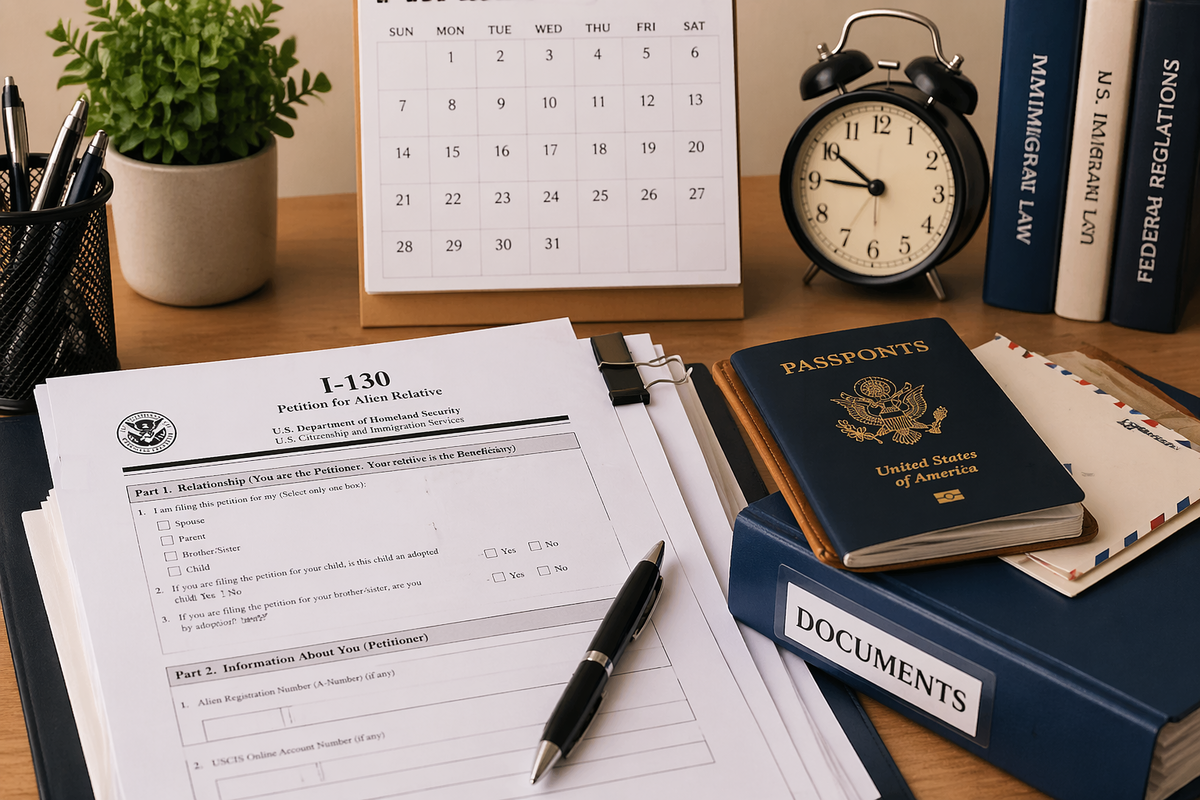
Understanding family based green card processing time is one of the most common concerns for individuals seeking to reunite with loved ones in the United States. While the process is well-defined under Immigration Law, the timeline can vary significantly depending on the type of petition, visa availability, and how the case is handled.
This guide explains what affects family based green card processing time, what realistic timelines look like, and how to avoid unnecessary delays.
What Is a Family-Based Green Card?
A family-based green card allows U.S. citizens and lawful permanent residents to sponsor certain relatives for permanent residency. The process begins with Form I-130, Petition for Alien Relative, filed with U.S. Citizenship and Immigration Services (USCIS).
From that point forward, the timeline depends largely on the relationship category and whether a visa number is immediately available.
Immediate Relatives vs. Preference Categories
A key factor influencing family based green card processing time is how the beneficiary is classified under immigration law.
Immediate Relatives (Faster Processing)
These include:
- Spouses of U.S. citizens
- Unmarried children under 21 of U.S. citizens
- Parents of U.S. citizens (if the petitioner is over 21)
These cases are not subject to annual visa limits, which generally results in shorter processing timelines.
Family Preference Categories (Longer Wait Times)
These include:
- Unmarried adult children of U.S. citizens
- Spouses and unmarried children of green card holders
- Married children of U.S. citizens
- Siblings of U.S. citizens
Because these categories are subject to annual quotas, applicants must wait for a visa number to become available, which can significantly extend the overall timeline.
Step-by-Step Timeline
The total family based green card processing time is made up of several stages:
1. Form I-130 Processing
USCIS reviews the petition to confirm the qualifying relationship. This stage can take several months to over a year, depending on the service center and case volume.
2. Visa Availability (If Required)
For preference categories, applicants must wait until their priority date becomes current under the Department of State Visa Bulletin. This is often the longest part of the process.
3. Final Application Stage
Adjustment of Status (Inside the U.S.)
Applicants already in the United States may apply for permanent residence by filing Form I-485. This includes biometrics, background checks, and an interview.
Consular Processing (Outside the U.S.)
Applicants abroad complete their case through a U.S. consulate after document review by the National Visa Center (NVC).
How Long Does the Process Take?
The overall timeline varies widely:
Immediate Relatives:
Typically 10 months to 2 years
Preference Categories:
Several years or more, depending on demand and country of origin
These differences highlight why it is important to evaluate each case individually rather than relying on general estimates.

Factors That Affect Processing Time
Several variables can impact how long a case takes:
USCIS Workload
Processing speeds vary depending on staffing and application volume.
Visa Bulletin Backlogs
For preference categories, demand often exceeds available visas, leading to long wait times.
Country of Origin
Applicants from certain countries may experience longer delays due to higher demand.
Application Accuracy
Incomplete or incorrect filings can result in Requests for Evidence (RFEs), which delay the process.
Interview Scheduling
Delays in scheduling interviews—either in the U.S. or abroad—can extend the timeline.
Common Delays and How to Avoid Them
Even straightforward cases can be delayed by avoidable issues, such as:
- Missing documentation
- Errors in forms
- Failure to respond to USCIS notices
- Inconsistent information
Taking the time to prepare a complete and accurate application can help reduce delays and improve efficiency.
Strategic Considerations
An Experienced Immigration Attorney will assess factors such as:
- Whether adjustment of status is available
- Timing based on visa availability
- Potential risks, including prior immigration violations
These considerations can have a direct impact on family based green card processing time and the success of the case.
Why Legal Guidance Matters
Although some applicants handle the process on their own, immigration law is complex. Even small mistakes can lead to delays or denials.
Legal guidance can help:
- Ensure the correct category is used
- Avoid procedural errors
- Prepare strong supporting documentation
- Address complications proactively
Final Thoughts
Understanding family based green card processing time requires a careful review of both legal eligibility and procedural steps. Timelines vary widely, but proper preparation and accurate filings can make a meaningful difference.
For many families, the process may take time—but with the right strategy, it can be navigated successfully.
J Kelley Law Group has extensive experience guiding families through the immigration process—contact us today to get trusted support for your case.
Frequently Asked Questions
1. How long does a family-based green card take to process?
The timeline varies depending on the category. Immediate relatives of U.S. citizens may receive a green card in about 10 months to 2 years, while preference categories can take several years due to visa backlogs and annual limits.
2. What is the processing time for Form I-485 in family-based cases?
Form I-485 processing times typically range from several months to over a year. The timeline depends on USCIS workload, interview scheduling, and whether additional documentation is required.
3. How long does the I-130 petition take for family-based immigration?
Form I-130 processing can take several months to over a year depending on the service center and case complexity. Approval of this petition is the first major step before continuing the green card process.
4. Can a family-based green card be approved in less than a year?
In some immediate relative cases, approval may occur in under a year, especially if the applicant is already in the United States and files concurrently. However, this is not guaranteed and depends on case-specific factors.
5. What factors can delay a family-based green card application?
Common delays include incomplete applications, requests for evidence (RFEs), visa bulletin backlogs, country-specific demand, and delays in interview scheduling. Proper preparation can help reduce these issues.





Hi, as per my records my category under family based green card application is F1. But on a recent conversation with Georgia senator, his office informed me that it is appearing f2b. I would like to know how your team can support my csse in front of uscis. Also, f1 green card final date of action has become current for my priority date. Could your team help in this scenario as well?