

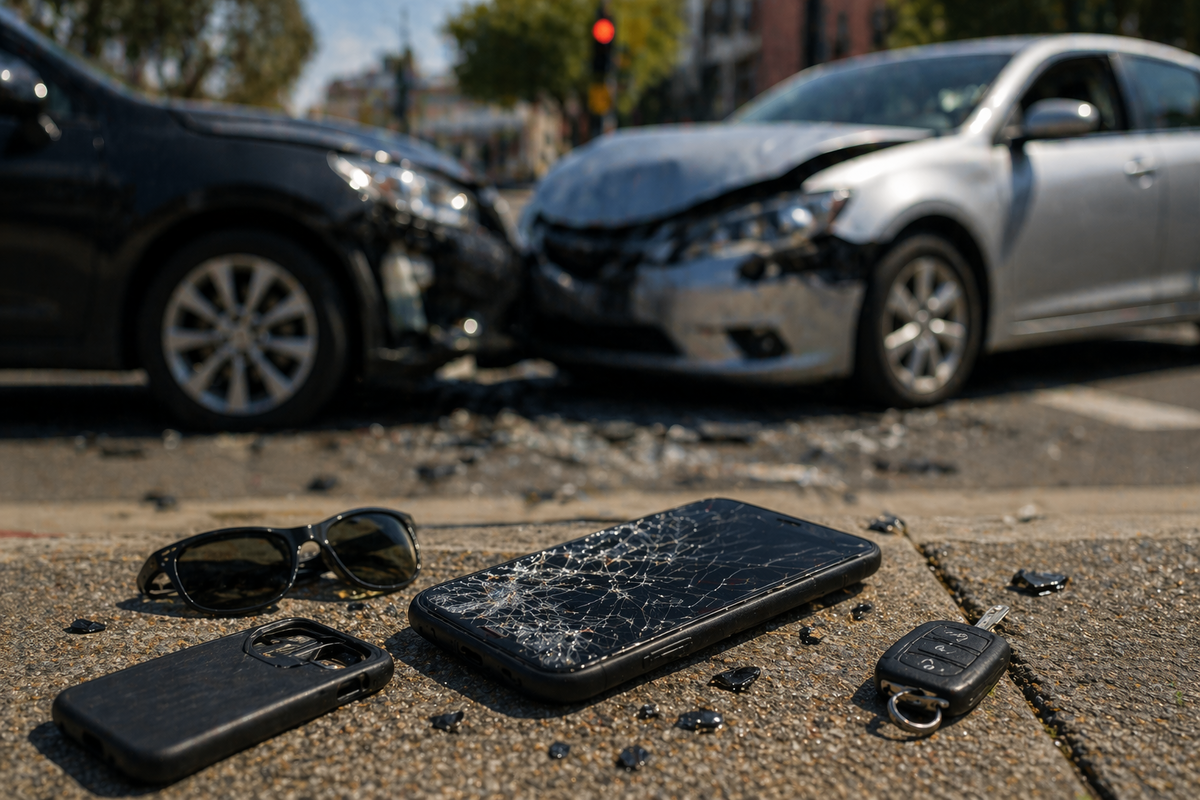
What to Do After a Distracted Driving Accident…
Distracted driving is one of the most common — and most misunderstood — causes of serious crashes. In 2024 alone, 3,208 people were killed and more than 315,000 injured in crashes involving distracted drivers, according to the National Highway Traffic Safety Administration (NHTSA). That risk has only grown with increased smartphone use and in-vehicle technology.
If you believe the crash that injured you was caused by a driver using a phone, the most important question is not whether distraction is dangerous — it is how to prove it and protect your claim.
This guide explains exactly what to do after a distracted driving accident, what evidence matters, and how insurance companies typically respond.
What Counts as Distracted Driving After a Crash
Phone Use vs. Other Forms of Distraction
Distracted driving includes far more than texting. NHTSA defines it as any activity that diverts attention from driving, including:
- Texting, calling, or using apps
- Adjusting GPS or music systems
- Eating or drinking
- Talking to passengers
- Reaching for objects inside the vehicle
Texting is especially dangerous because it combines visual, manual, and cognitive distraction. Looking at a phone for just five seconds at highway speed means driving the length of a football field without watching the road.
Why Distraction Is Harder to Prove Than People Expect
Many injured victims assume that if the other driver was on their phone, it will be obvious. In reality:
- Drivers rarely admit distraction
- Police reports may not confirm phone use
- Evidence like camera footage or digital data can disappear quickly
This is why early documentation and evidence preservation are critical.
The First Steps to Take After a Suspected Distracted-Driving Crash
Medical Care
Your health comes first. Seek immediate medical attention, even if injuries seem minor. Medical records also serve as key evidence linking the crash to your injuries.
Photos, Witnesses, and Scene Details
If you are able:
- Take photos of vehicles, damage, skid marks, and surroundings
- Capture the other driver’s position and behavior
- Get contact information from witnesses
- Note anything unusual (e.g., driver holding a phone, looking down)
Witness observations are often one of the strongest early indicators of distraction.
What to Say — and Not Say — to the Other Driver
Keep communication minimal and factual:
- Do not accuse the driver directly
- Do not speculate about fault
- Do not apologize
Statements made at the scene can later be used by insurance companies to shift blame.
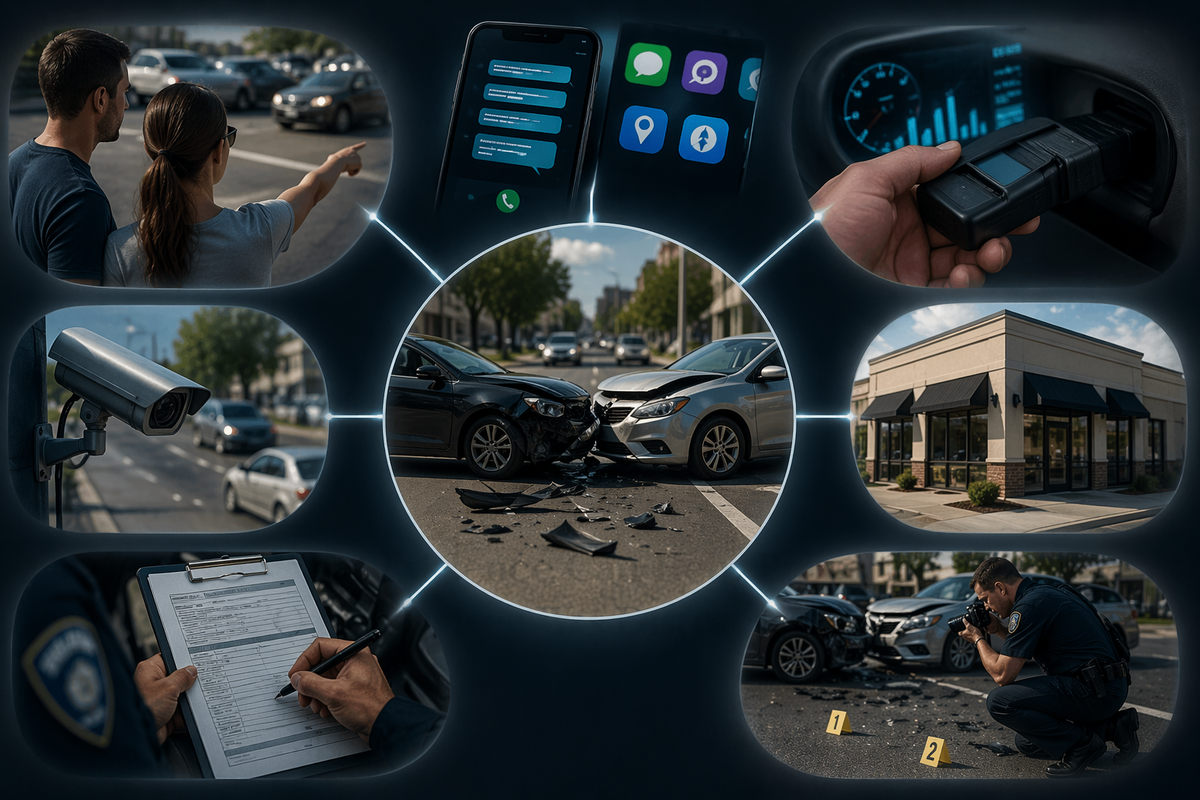
What Evidence Can Help Prove the Other Driver Was Distracted
Witness Observations
Independent witnesses may report:
- The driver looking down before impact
- Swerving or delayed braking
- A phone visible in the driver’s hand
These details can become critical if the driver later denies distraction.
Phone Records and App Activity
Phone records can sometimes show:
- Calls or texts sent at the time of the crash
- Data usage consistent with app activity
However, these records are not automatically available. They typically require legal action (such as a subpoena) and must be handled properly.
Vehicle Data, Cameras, and Nearby Businesses
Other valuable sources include:
- Dashcams or traffic cameras
- Surveillance footage from nearby businesses
- Vehicle event data recorders (EDRs)
- Smart vehicle or app-connected systems
Important: many of these sources overwrite or delete data quickly, sometimes within days.
Police Reports and Follow-Up Investigation
Police reports are helpful but often incomplete when it comes to distraction. Officers may:
- Issue a citation for phone use
- Note witness statements
- Document driver behavior
Still, a report alone rarely proves the full case. Additional investigation is often necessary.
How Distracted-Driving Claims Usually Play Out with Insurance
Liability Disputes
Insurance companies frequently challenge distracted-driving claims by arguing:
- There is no direct proof of phone use
- The crash could have been caused by something else
- The injured person shares responsibility
Even when distraction seems obvious, insurers often require clear, supported evidence.
Comparative or Contributory Fault Arguments
Depending on the state, insurance companies may reduce or deny claims if they can show the injured person contributed to the crash.
In Maryland, the rule is strict:
- Contributory negligence means that if you are found even slightly at fault, you may be barred from recovery
This makes early and accurate evidence especially important.
State-Law Differences Readers Should Not Overlook
Handheld Bans and Texting Bans
Distracted-driving laws vary widely across states. According to the Governors Highway Safety Association (GHSA):
- Many states ban handheld phone use entirely
- Others prohibit texting but allow certain phone use
- Enforcement and penalties differ significantly
Maryland has a handheld phone ban and texting restrictions, which can support a claim — but do not guarantee success.
Why a Traffic Citation Does Not Prove the Civil Case
A ticket for texting or handheld phone use may help your case, but it is not decisive. Civil injury claims require proof of:
- Negligence
- Causation
- Damages
Insurance companies can still dispute liability even if a citation was issued.
When a Distracted-Driving Crash Deserves Legal Review
You should consider speaking with a personal injury attorney if:
- You suspect the driver was using a phone
- There are serious injuries or medical expenses
- The insurance company disputes fault
- Evidence may be lost or difficult to obtain
A legal review can help preserve key evidence, request phone records when appropriate, and protect your claim — especially in a state like Maryland.
If you were injured by a distracted driver, acting quickly can help protect your claim and preserve key evidence. J Kelley Law Group represents personal injury cases across Maryland. Learn more about your options on our Personal Injury page.
FAQs
How do you prove distracted driving after an accident?
Proof typically comes from a combination of evidence, including witness statements, phone records, surveillance footage, and accident reconstruction. No single piece of evidence is usually enough on its own.
Can phone records be used in a car accident claim?
Yes, but they are not automatically accessible. Phone records usually require legal procedures such as subpoenas and must be handled carefully to be admissible.
What if the driver denies using a phone?
This is common. Claims often rely on indirect evidence such as witness accounts, driving behavior, and digital data to challenge the denial.
Does a texting ticket prove fault in a personal injury case?
No. A traffic citation can support your claim but does not automatically establish civil liability. Additional evidence is still required.
What should I do if I was hit by a distracted driver in Maryland?
Seek medical care, document the scene, gather witness information, and avoid discussing fault at the scene. Because Maryland follows contributory negligence rules, it is especially important to preserve evidence early and consider legal guidance.





0 Comments